
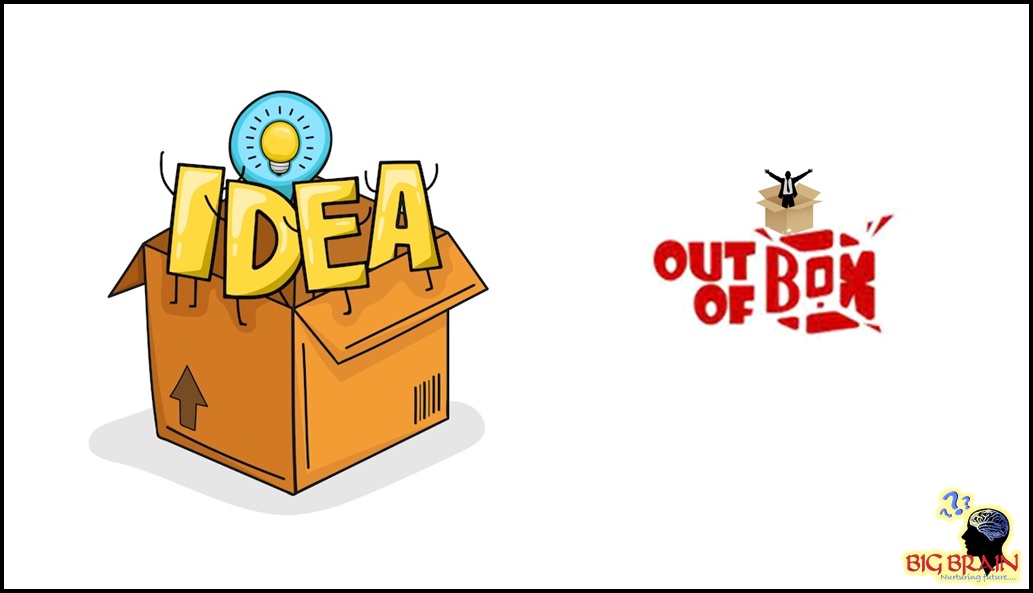
Thinking Out of the Box: A Detailed Note
Thinking out of the box is a phrase that emphasizes creative, unconventional, and non-linear thinking. It involves approaching problems or challenges from fresh perspectives, breaking free from traditional norms and patterns, and seeking innovative solutions that others might overlook. In today’s fast-paced and ever-evolving world, out-of-the-box thinking has become an essential skill for personal development, organizational growth, and problem-solving.
In this note, we will explore:
- Definition and Concept of Thinking Out of the Box
- Importance of Thinking Out of the Box
- Key Elements of Creative Thinking
- Barriers to Thinking Out of the Box
- Techniques for Encouraging Out-of-the-Box Thinking
- Real-World Examples of Out-of-the-Box Thinking
- Fostering a Culture of Innovation and Creativity
1. Definition and Concept of Thinking Out of the Box
A. What is Thinking Out of the Box?
“Thinking out of the box” means to approach problems in an unconventional or novel way. It is about challenging assumptions, thinking beyond the obvious, and using creativity to devise solutions that deviate from the norm.
- Breaking conventional boundaries: It involves moving away from the usual, linear, and predictable paths of thought to discover alternatives that may not be immediately apparent.
- Unconstrained creativity: The process often requires abandoning the mental “boxes” that contain habitual ways of thinking. These “boxes” are usually built from past experiences, knowledge, and societal expectations.
B. The Origin of the Term
The term originated from a classic puzzle called the “nine dots puzzle,” where individuals were asked to connect nine dots with four straight lines without lifting the pencil or retracing any line. The solution required extending the lines outside the assumed boundaries (or “box”) formed by the dots. This puzzle demonstrated how people naturally create self-imposed boundaries, and how breaking those assumptions leads to solving problems in innovative ways.
2. Importance of Thinking Out of the Box
A. Problem Solving
Thinking out of the box is critical when traditional methods fail to provide solutions. Creative thinking allows individuals and organizations to discover unique approaches to solving problems.
- Complex issues: In today’s complex, interconnected world, many problems cannot be solved through traditional thinking alone. Solutions often require lateral thinking and multiple perspectives.
- Resource constraints: When resources like time, money, or tools are limited, thinking outside the box can lead to new ways of achieving the same goals with less.
B. Innovation and Growth
Out-of-the-box thinking is the foundation for innovation. Whether in business, science, or technology, breakthroughs often come from questioning existing norms and finding new paths.
- Driving innovation: Many major technological advances and business breakthroughs come from people who thought differently from the status quo. Innovation is fueled by those who dare to challenge the way things have always been done.
- Competitive advantage: Organizations that encourage out-of-the-box thinking are more likely to develop cutting-edge products, services, and strategies, giving them a competitive advantage in their industry.
C. Personal and Professional Development
On a personal level, thinking out of the box enables individuals to grow and develop in their careers. It fosters adaptability, resilience, and the ability to navigate uncertainty.
- Career growth: In professional settings, individuals who think creatively and contribute innovative ideas often stand out as leaders and are more likely to advance in their careers.
- Personal growth: Out-of-the-box thinking encourages learning, adaptability, and the expansion of one’s horizons, allowing for personal growth and fulfillment.
3. Key Elements of Creative Thinking
A. Challenging Assumptions
A significant part of thinking out of the box is the ability to question assumptions and challenge the way things are done. Most people are conditioned to follow routines and established rules, but creative thinkers constantly ask, “Why not?” or “What if?”
- Questioning norms: Rather than accepting things at face value, creative thinkers challenge the underlying assumptions and explore alternative explanations.
- Critical thinking: Engaging in critical thinking helps to identify constraints that are self-imposed or based on outdated beliefs, enabling the discovery of innovative approaches.
B. Lateral Thinking
Lateral thinking, a term coined by Edward de Bono, refers to solving problems using indirect and creative approaches. It involves looking at problems from different angles and employing a broad range of ideas to generate new solutions.
- Divergent thinking: Unlike linear thinking, which follows a direct, logical path, lateral thinking explores multiple possibilities and perspectives before arriving at a solution.
- Connection-making: Lateral thinking often involves making unexpected connections between seemingly unrelated ideas or concepts, which can lead to breakthrough solutions.
C. Risk-Taking
Creative thinking requires the willingness to take risks and step outside of one’s comfort zone. Those who think out of the box often propose ideas that may seem radical or risky, but which can lead to significant rewards.
- Tolerance for ambiguity: Creative thinkers accept the uncertainty and ambiguity that come with trying new ideas. They are not afraid of failure, as they see it as part of the learning process.
- Experimentation: Thinking out of the box often requires trial and error. By experimenting with new approaches, individuals can discover what works and what doesn’t.
4. Barriers to Thinking Out of the Box
Despite its importance, thinking out of the box is not easy and there are several common barriers that prevent individuals and organizations from adopting this mindset.
A. Fear of Failure
One of the biggest barriers to creative thinking is the fear of failure. People often avoid trying new ideas because they fear they might fail, be judged, or lose credibility.
- Risk aversion: The desire to avoid mistakes can lead to a reliance on safe, conventional approaches, which stifles creativity.
- Overemphasis on perfection: Perfectionism can prevent people from thinking creatively, as they may feel that only flawless ideas are worth pursuing.
B. Comfort with Routine
Routines and established methods can trap individuals in a pattern of thinking that is difficult to break. Once people become comfortable with certain processes, they are less likely to explore alternatives.
- Resistance to change: Many people resist change and innovation because they are comfortable with the status quo, even if it’s inefficient or outdated.
- Lack of flexibility: Inflexibility in thinking can lead to the rejection of new ideas simply because they deviate from the norm.
C. Organizational Constraints
Organizations can sometimes create environments that stifle creative thinking. Rigid hierarchies, strict rules, and a focus on short-term goals can discourage employees from thinking out of the box.
- Bureaucracy: In highly bureaucratic organizations, decision-making processes can be slow, which discourages the exploration of new ideas.
- Cultural barriers: Organizations with a culture that punishes failure or values conformity are unlikely to foster an environment where out-of-the-box thinking thrives.
5. Techniques for Encouraging Out-of-the-Box Thinking
Several techniques and strategies can be employed to encourage out-of-the-box thinking in individuals and teams.
A. Brainstorming
Brainstorming sessions allow individuals to generate a wide variety of ideas without the fear of criticism. This technique encourages creativity by allowing participants to propose even the most unconventional ideas.
- No judgment: During brainstorming, no idea is too outlandish, and participants are encouraged to contribute freely without the fear of judgment.
- Quantity over quality: The goal is to generate as many ideas as possible, even if they seem impractical at first. Often, innovative solutions emerge from unexpected combinations of ideas.
B. Mind Mapping
Mind mapping is a visual brainstorming technique that helps individuals explore ideas and their interconnections. It allows for creative thinking by providing a visual representation of the relationships between different concepts.
- Visualizing connections: A mind map helps to organize thoughts and explore various paths of thinking, which can lead to new insights.
- Non-linear thinking: This method encourages non-linear thinking by allowing users to branch out from central concepts in multiple directions.
C. Perspective Shifting
Changing perspectives or “thinking from someone else’s shoes” can lead to creative insights. By viewing a problem through different lenses, new solutions can emerge.
- Empathy-based thinking: Consider how different stakeholders—customers, employees, or competitors—might view the problem.
- Role-playing: Encourage individuals to take on different roles or personas when considering a challenge. This can reveal alternative approaches that were not previously considered.
D. Breaking Routine
Consciously disrupting routines can stimulate creative thinking by forcing individuals to think differently. Simple actions, like working in a new environment or changing daily habits, can help break mental patterns.
- Change the environment: A change in surroundings can stimulate new thoughts and ideas.
- New experiences: Engaging in activities outside of one’s normal routine, such as traveling, learning new skills, or meeting new people, can inspire creative thinking.
6. Real-World Examples of Out-of-the-Box Thinking
A. Apple and the iPhone
One of the most famous examples of out-of-the-box thinking is Apple’s development of the iPhone. While many tech companies were focused on improving traditional mobile phones, Apple redefined the concept of a phone by combining it with a portable computer, touch screen, and apps—elements that were not commonly associated with phones at the time.
B. Airbnb
Airbnb was born from a simple out-of-the-box idea—renting out space in your home to strangers. At the time, the hospitality industry was dominated by hotels, but Airbnb challenged traditional accommodation by offering people the opportunity to rent out their homes or apartments.
C. Tesla’s Electric Vehicles
Tesla’s approach to electric vehicles (EVs) is another example of thinking out of the box. While other car manufacturers were hesitant to fully invest in EVs, Tesla revolutionized the industry by designing high-performance, eco-friendly cars, backed by a robust network of charging stations.
7. Fostering a Culture of Innovation and Creativity
For organizations to benefit from out-of-the-box thinking, they need to foster a culture of innovation and creativity.
A. Encouraging Open Communication
Organizations that encourage open dialogue and the free flow of ideas are more likely to foster creative thinking. Employees should feel comfortable sharing unconventional ideas without fear of criticism.
- Diverse viewpoints: Encourage teams with diverse backgrounds and experiences to bring a variety of perspectives to the table.
- Feedback loops: Create a system for regularly sharing and discussing ideas, both successful and unsuccessful.
B. Providing Autonomy and Empowerment
Employees are more likely to think creatively when they have the freedom to make decisions and explore new ideas.
- Trust and autonomy: Empower employees to take ownership of their work and allow them the flexibility to try out new ideas.
- Encouraging experimentation: Provide resources and time for employees to experiment and innovate without the pressure of immediate results.
C. Celebrating Failure
Organizations that celebrate failure as a learning experience are more likely to encourage creative risk-taking.
- Learning culture: Frame failures as opportunities for learning and improvement, rather than as setbacks.
- Reward innovation: Recognize and reward innovative thinking, even if it does not lead to immediate success.
Conclusion
Thinking out of the box is an essential skill in today’s complex and rapidly changing world. It requires individuals to challenge assumptions, take risks, and explore new perspectives in order to find innovative solutions. Organizations and individuals who cultivate creative thinking and are willing to break free from conventional approaches are better equipped to navigate challenges, seize opportunities, and drive innovation. By fostering a culture of openness, experimentation, and curiosity, both individuals and organizations can unlock the full potential of out-of-the-box thinking.