
Introduction: The Paradox of Connection
We are more connected than at any other point in human history. With a few clicks, we can see a friend’s face across the globe, collaborate with colleagues on different continents in real-time, and access the lived experiences of millions. Yet, this hyper-connectivity often comes with a profound sense of isolation, misunderstanding, and emotional fatigue. The very tools designed to bring us closer can, when misused, create cavernous emotional distances.
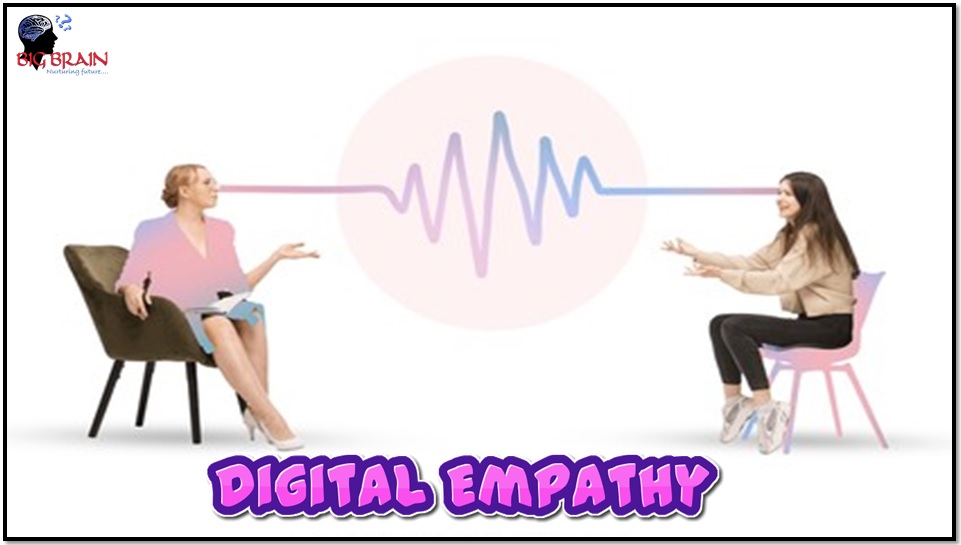
This paradox has given rise to a critical new soft skill: Digital Empathy. Digital empathy is the ability to understand, acknowledge, and respond to the feelings, needs, and perspectives of others within a digital interaction, despite the absence of physical cues. It is the conscious practice of injecting humanity into the binary world of screens, text, and asynchronous communication. It is not merely being nice online; it is a sophisticated, intentional, and learnable competency that is becoming indispensable for effective leadership, collaboration, customer service, and simply being a decent digital citizen.
This document will provide a full breakdown of digital empathy, exploring its definition, why it is so critically needed today, the unique challenges of the digital medium, its core components, practical strategies for its application, and its measurable impact on business and society.
1. Defining Digital Empathy: Beyond Analog Empathy
To understand digital empathy, we must first distinguish it from general empathy. Traditional empathy involves:
-
Cognitive Empathy: Understanding another person’s perspective.
-
Affective Empathy: Physically feeling what another person is feeling.
-
Compassionate Empathy: Taking action to help based on your understanding.
Digital empathy encompasses all three but must operate within a constrained environment. The digital medium strips away the richest sources of human emotional data: body language (55% of communication), tone of voice (38%), and other non-verbal cues, leaving us with only the words themselves (7%), and often in a delayed, text-based format.
Therefore, Digital Empathy is the practiced ability to cognitively bridge the gap created by digital mediation to achieve affective understanding and motivate compassionate action. It is empathy, plus translation, plus intention.
2. The Imperative: Why Digital Empathy is Non-Negotiable Now
Several seismic shifts in our professional and personal lives have catapulted digital empathy from a “nice-to-have” to a “must-have.”
-
The Permanence of Remote/Hybrid Work: The pandemic accelerated a transition to remote work that is now a permanent fixture. Teams are no longer built solely on watercooler conversations and lunch breaks. Trust, camaraderie, and psychological safety must be built and maintained digitally. A leader who cannot sense burnout from a tersely worded Slack message or a video call with cameras off will fail their team.
-
The Scale and Speed of Digital Communication: We are inundated with messages across emails, instant messages, project management tools, and social media. This volume leads to quick, reactive responses devoid of nuance. Digital empathy is the brake that forces a pause for consideration before hitting “send.”
-
The Customer Experience (CX) Revolution: Customer interactions are overwhelmingly digital. A customer’s entire perception of a brand can be shaped by a single chat support conversation, an email response, or a comment on a social media post. Empathetic digital interactions are the new frontline of customer loyalty and brand reputation.
-
Combating Digital Fatigue (Zoom Fatigue): The constant strain of video calls and digital interaction is real. It is cognitively draining to process patchy audio, frozen video, and the lack of natural flow. Empathetic practices—like making cameras optional, allowing for meeting-free days, and being mindful of others’ schedules—are crucial for preventing burnout.
-
Mitigating Miscommunication and Conflict: The absence of tone and body language makes text-based communication a minefield for misunderstanding. A sarcastic joke can be read as an insult; a quick, efficient message can be perceived as cold and rude. Digital empathy provides the tools to preempt and de-escalate these situations.
3. The Core Components of Digital Empathy
Digital empathy is not a single action but a mosaic of interrelated skills and mindsets.
A. Cognitive Translation:
This is the intellectual work of interpreting digital cues. It involves:
-
Reading Between the Lines: Analyzing word choice, punctuation, response time, and even platform choice (e.g., a formal email vs. a quick Slack message) to gauge the sender’s emotional state.
-
Ascribing Positive Intent: Starting from the assumption that the other person is not trying to be difficult or rude. This foundational mindset prevents defensive reactions.
-
Context Awareness: Understanding what the other person might be going through. Are they in a different time zone? Is it their weekend? Are they juggling homeschooling? This context informs your interpretation.
B. Affective Imagination:
This is the emotional work of connecting to the human on the other side of the screen.
-
Mental Simulation: Actively imagining yourself in the other person’s physical and emotional environment. What would it feel like to receive this message in their shoes?
-
Validation: Acknowledging the other person’s feelings explicitly. A simple “I understand that must be frustrating” or “Thank you for sharing that, it sounds challenging” can build immense rapport.
-
Vulnerability: Appropriately sharing your own feelings or context to humanize the interaction. “I’m also feeling swamped this week, so I appreciate your patience” creates a shared human experience.
C. Compassionate Action:
This is the behavioral output—the tangible steps taken based on cognitive and affective empathy.
-
Crafting Conscious Communication: Meticulously designing your messages for clarity and tone. Using clear subject lines, thoughtful formatting, empathetic language, and, when in doubt, picking up the phone for a quick call.
-
Proactive Support: Anticipating needs and questions. Providing extra information, resources, or reassurance without being asked.
-
Flexibility and Accommodation: Being willing to adapt schedules, deadlines, and processes to accommodate the human realities of your colleagues or customers.
-
Setting Digital Boundaries: Empathy also extends to respecting others’ time and focus. This means not sending messages late at night (using scheduled send), being clear about urgency, and not expecting instantaneous responses.
4. Practical Strategies for Cultivating Digital Empathy
This skill can be developed through intentional practice. Here’s how to apply it across different digital mediums:
A. In Written Communication (Email, Chat):
-
The Subject Line is a Tone-Setter: Use clear, descriptive, and positive or neutral subject lines. Avoid “URGENT!!!!” unless it truly is.
-
Lead with the Positive: Start emails with a warm greeting and a positive note or expression of gratitude before launching into requests or criticism. “Hope you’re having a good week. Thanks for your hard work on the draft. I’ve reviewed it and have a few thoughts for the next iteration…”
-
Punctuation is Your Tone of Voice: Use exclamation points sparingly to express enthusiasm. Avoid ellipses (…) which can seem passive-aggressive or ominous. Use periods clearly.
-
Emojis and GIFs with Care: In appropriate contexts (e.g., internal teams with established rapport), a well-placed smiley face 🙂 or thumbs-up 👍 can soften tone and convey warmth. Avoid them in formal client communication or sensitive topics.
-
Read Aloud Before Sending: This is the single best practice. Hearing the words will instantly highlight any potential for harshness, sarcasm, or ambiguity.
-
Assume Good Faith: If a message seems off, don’t immediately fire back a defensive reply. Ask a clarifying question: “I want to make sure I’m understanding correctly, could you elaborate on X?”
B. In Video Conferencing:
-
Camera-On Culture (with Compassion): Encourage cameras on to foster connection, but be empathetic to “camera fatigue,” bandwidth issues, or personal circumstances. Make it a choice, not a mandate.
-
Be Fully Present: Avoid the temptation to multitask. Looking at your screen, nodding, and using verbal affirmations (“mmm-hmm,” “I see”) shows you are engaged.
-
Leverage the Chat Function Empathetically: Use the chat to support, not distract. Post helpful links, express agreement (“Great point, Sarah!”), or ask clarifying questions that enrich the discussion.
-
Mind the Schedule: Start and end on time. Respect the fact that back-to-back video calls are exhausting. Build in 5-minute buffers between meetings.
C. In Customer Service and Support:
-
Personalize the Interaction: Use the customer’s name. Reference their specific issue without making them repeat it.
-
Practice Active Listening Digitally: Paraphrase their problem back to them to show understanding. “So if I’m understanding correctly, you’ve tried X and Y and are still running into the error when you Z.”
-
Express Authentic Regret and Ownership: “I’m so sorry you’ve been dealing with this. That sounds incredibly frustrating. Let’s see what we can do to get this sorted for you right now.”
-
Follow Up: A follow-up email to ensure the solution worked is a powerful gesture of care that transcends the transaction.
5. The Impact: Why Businesses Must Invest in Digital Empathy
The benefits of cultivating digital empathy are not just philosophical; they are concrete and measurable.
-
Enhanced Employee Engagement and Retention: Employees who feel seen, heard, and understood by their remote managers are more loyal, productive, and less likely to burn out. Empathy is the cornerstone of psychological safety.
-
Superior Customer Loyalty and Brand Reputation: Customers remember how a company made them feel. An empathetic resolution to a problem can often create more loyalty than a flawless service experience. Positive word-of-mouth from such interactions is invaluable.
-
Improved Collaboration and Innovation: Teams that communicate with empathy experience less conflict and misunderstanding. This creates a safe environment for sharing half-formed ideas, debating constructively, and innovating freely.
-
Reduced Digital Miscommunication: By investing in training for clear, conscious communication, organizations can drastically reduce the time and energy wasted on clarifying misunderstandings and repairing working relationships damaged by poorly worded messages.
Conclusion: The Human Differentiator
As technology continues to advance with AI writing our emails and algorithms mediating our relationships, the ability to connect on a human level will become the ultimate differentiator. Digital empathy is the skill that allows us to remain human in a digital age. It is the conscious choice to prioritize connection over convenience, understanding over efficiency, and people over processes.
It is not about mastering a new software but about mastering ourselves—our words, our intentions, and our attention. By diligently practicing digital empathy, we do not just become better professionals; we build a more thoughtful, compassionate, and ultimately more human digital world.